The number 51 Ferrari started first and finished second. The number 50 had the fastest lap but finished sixth. Imola was not a shortage of pace, it was a shortage of conversion.
By Richard Ley · Research assistance: Ruben, pit.report AI race analysis · Revised 2 August 2026
Status: rewritten and fact-checked, ready for editorial approval. Hero image requires final DPPI selection and usage confirmation.
Hero image placeholder: number 51 Ferrari 499P at Imola, preferably leading early in the race. Credit: DPPI.
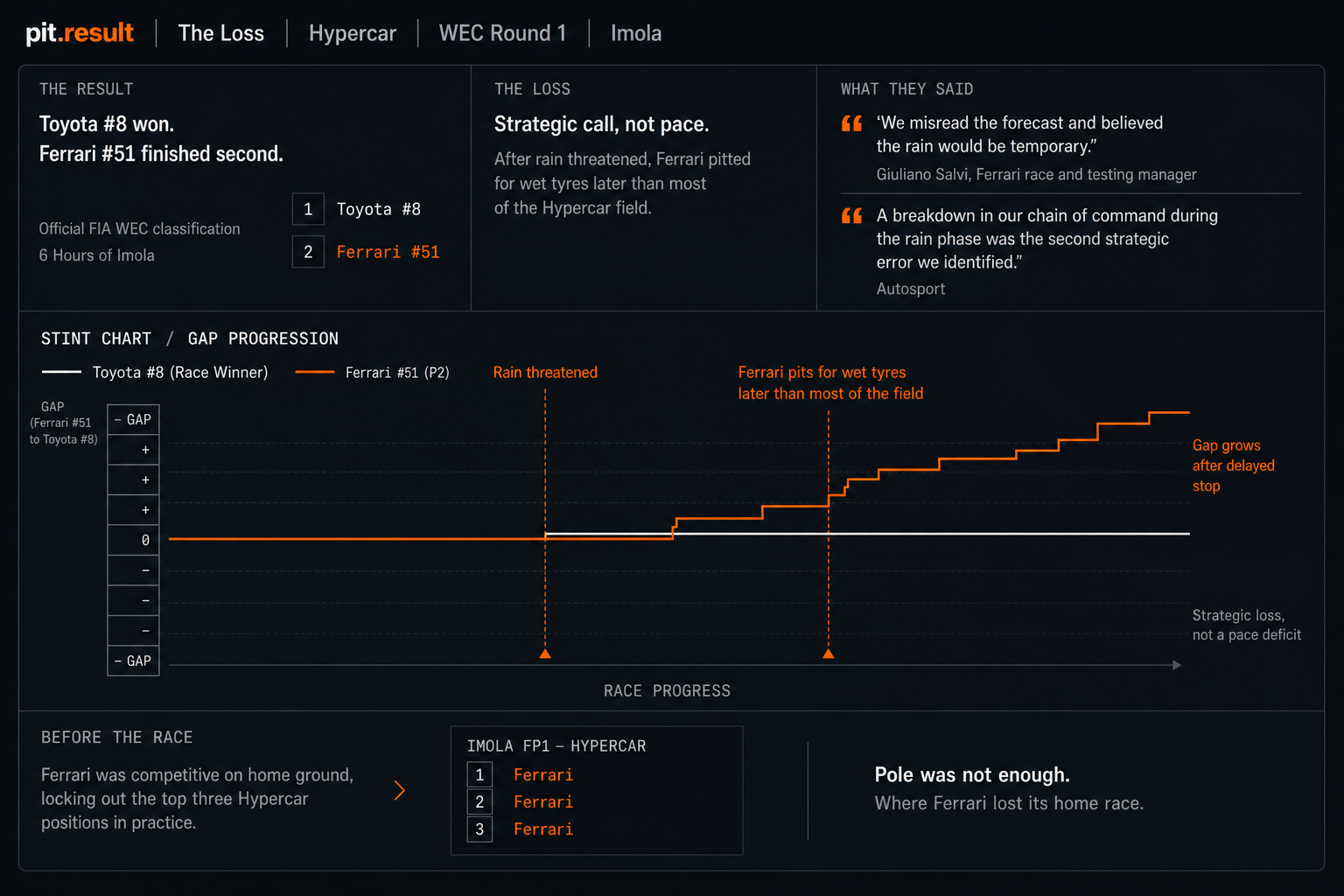
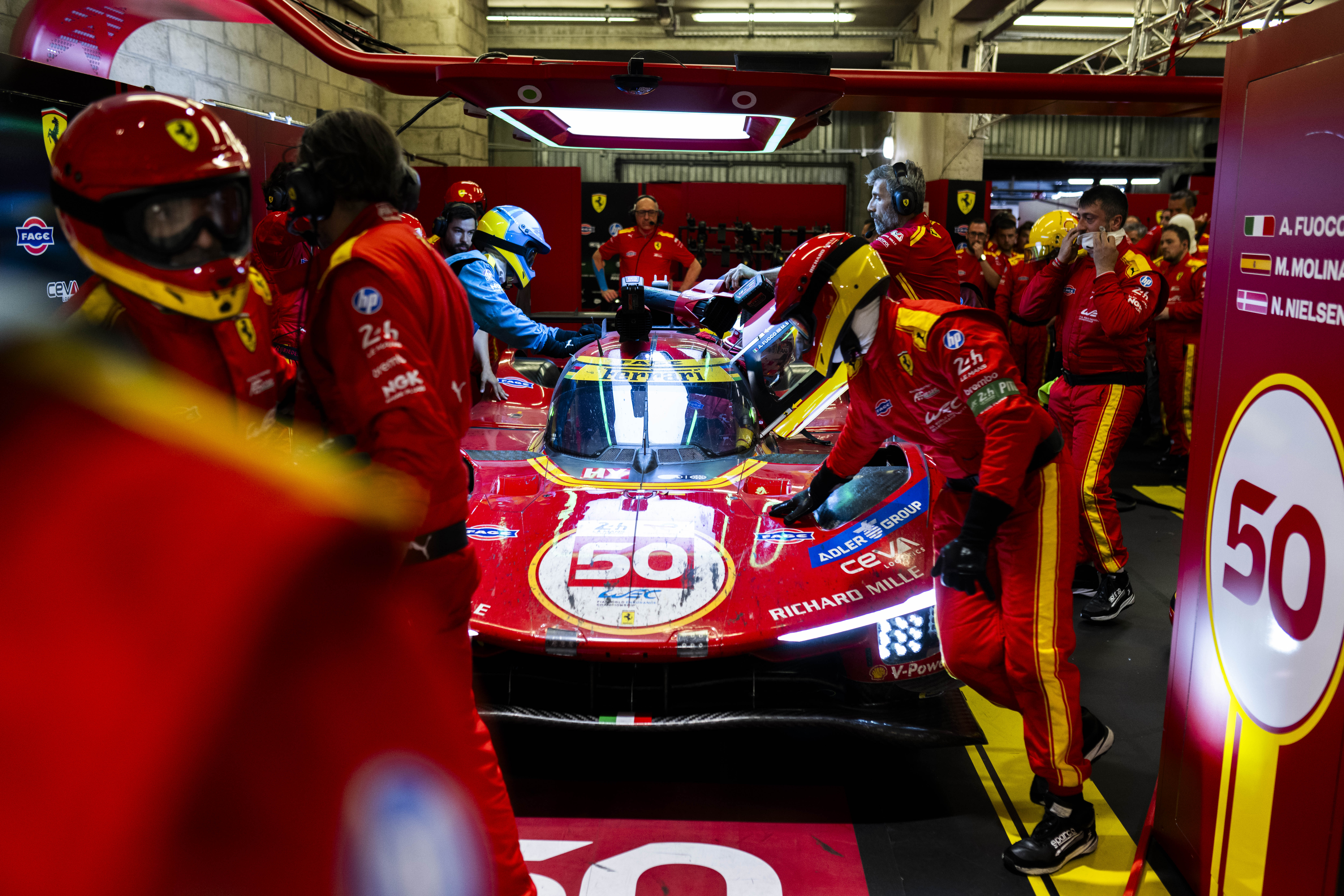
Ferrari began its home round with the strongest Saturday position. Antonio Giovinazzi put the number 51 499P on pole, and the car remained close enough to Toyota to keep the result open. Six hours later it was second, 13.352 seconds behind the number 8 Toyota. The number 50 Ferrari, which recorded the fastest lap of the race, finished sixth after a drive-through penalty for a yellow-flag infringement.
The two cars therefore reached the same disappointing result by different routes. The number 51 was beaten across the full race distance. Toyota managed the stints and stops well enough to build a margin Ferrari could not recover. The number 50 lost time through a penalty, then had to use its pace to repair the damage rather than fight for the win.
That does not justify calling Ferrari’s problem structural after one race. It does identify the first item on the 2026 review list. The 499P had enough speed to take pole and set the fastest race lap, but the team converted neither advantage into victory. At a home round, against a Toyota launching an updated car and a restored identity, that is the part of the result that hurts.
Ferrari left Imola with confirmation that the car remained competitive. It also left with a cleaner question than a lack of speed would have produced: how does a team that starts from the front make sure the race still belongs to it six hours later?
Nederlandse editie
Pole was niet genoeg: waar Ferrari zijn thuisrace verloor
De Ferrari nummer 51 startte als eerste en finishte als tweede. De nummer 50 reed de snelste ronde, maar werd zesde. Imola draaide niet om een gebrek aan snelheid, maar om het verzilveren ervan.
Ferrari begon zijn thuisronde vanuit de sterkste uitgangspositie. Antonio Giovinazzi zette de nummer 51 499P op pole en de auto bleef dicht genoeg bij Toyota om de uitslag open te houden. Zes uur later was hij tweede, op 13,352 seconden van de nummer 8 Toyota. De Ferrari nummer 50, die de snelste raceronde noteerde, finishte als zesde na een drive-through voor een overtreding onder geel.
De twee auto’s bereikten daarmee dezelfde teleurstelling via verschillende routes. De nummer 51 werd over de volledige raceafstand verslagen. Toyota voerde de stints en stops goed genoeg uit om een marge op te bouwen die Ferrari niet meer dichtreed. De nummer 50 verloor tijd door een straf en moest zijn snelheid vervolgens gebruiken om schade te herstellen, in plaats van om voor de zege te vechten.
Dat is na één race geen bewijs voor een structureel probleem. Het levert wel het eerste duidelijke aandachtspunt van 2026 op. De 499P had voldoende snelheid voor pole en de snelste raceronde, maar Ferrari zette geen van beide voordelen om in een overwinning. Tijdens de thuisrace, tegen een Toyota met een vernieuwde auto en een teruggekeerde naam, is dat het deel van de uitslag dat pijn doet.
Ferrari vertrok uit Imola met de bevestiging dat de auto competitief bleef. Het vertrok ook met een scherpere vraag dan een tekort aan snelheid zou hebben opgeleverd: hoe zorgt een team dat vooraan begint ervoor dat de race zes uur later nog steeds van hem is?
Primary sources: Official Imola results · Toyota takes 50th win in 100th start
pit.report · Internal copy · Publish only after final editorial approval and image clearance