The FIA World Endurance Championship did not launch with its intended cast. For two years, the Intercontinental Le Mans Cup, the ACO-run series the WEC succeeded, had been built around a straight fight between Audi and a factory Peugeot programme that had beaten it as often as it lost. Peugeot's own privateer satellite, Team Oreca-Matmut, had even won the final Sebring round of that old series outright in 2011, with a Peugeot 908 a full generation older than the factory car.
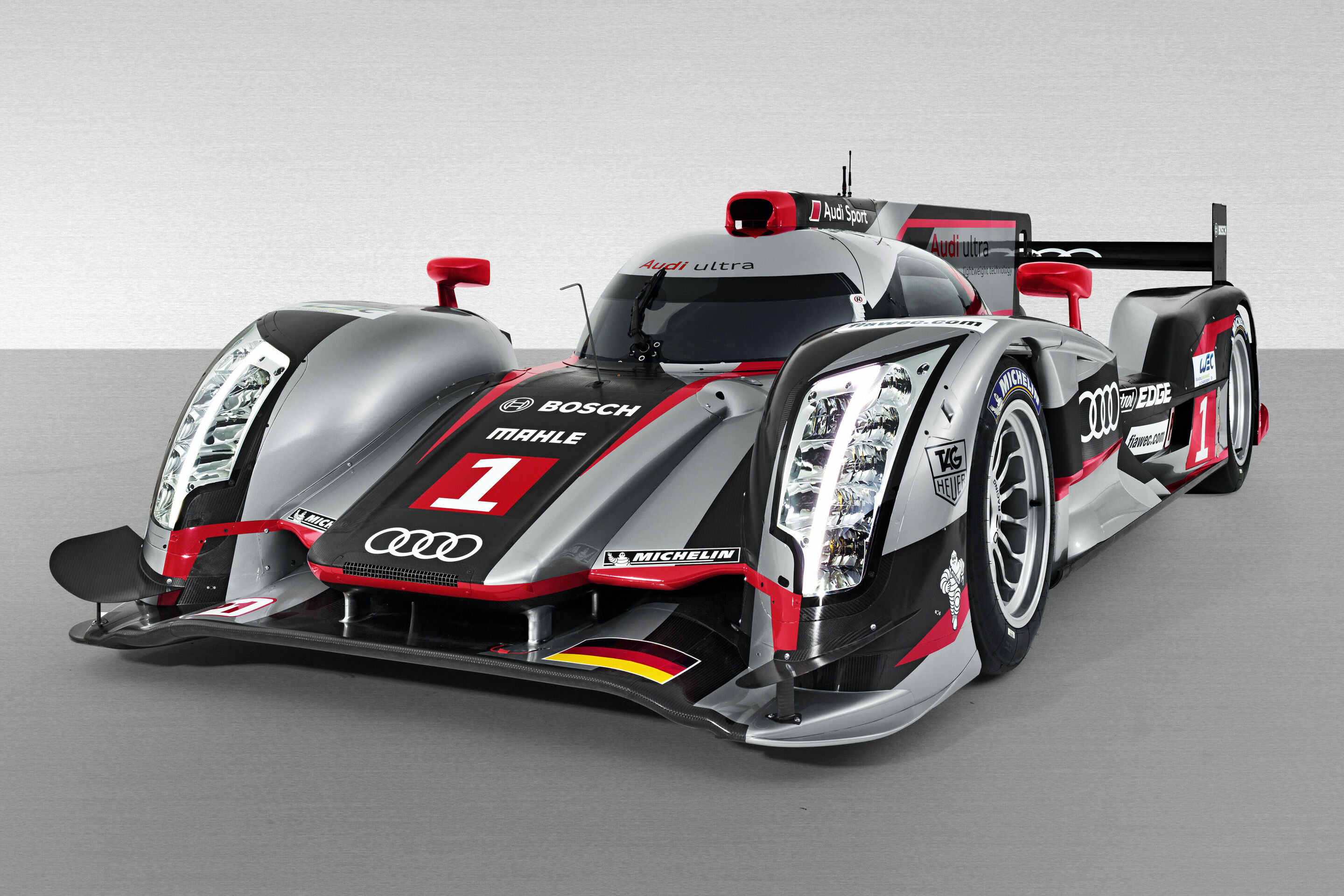
None of that mattered by January 2012. Peugeot announced it was pulling out of endurance racing entirely, citing economic pressure, six weeks before the new championship's first green flag. Toyota, invited to fill some of the resulting gap with its new TS030 Hybrid, decided it needed more time and skipped the opener outright: its car would not appear until Le Mans, after a testing accident at Paul Ricard wrote off its planned Spa debut too. The World Endurance Championship's first grid, in other words, was a one-marque affair before it had even turned a wheel: Audi Sport Team Joest, fielding three year-old R18 TDI diesels, against a supporting cast of LMP2 privateers and GT teams who suddenly found themselves racing for outright podiums nobody had planned for them.
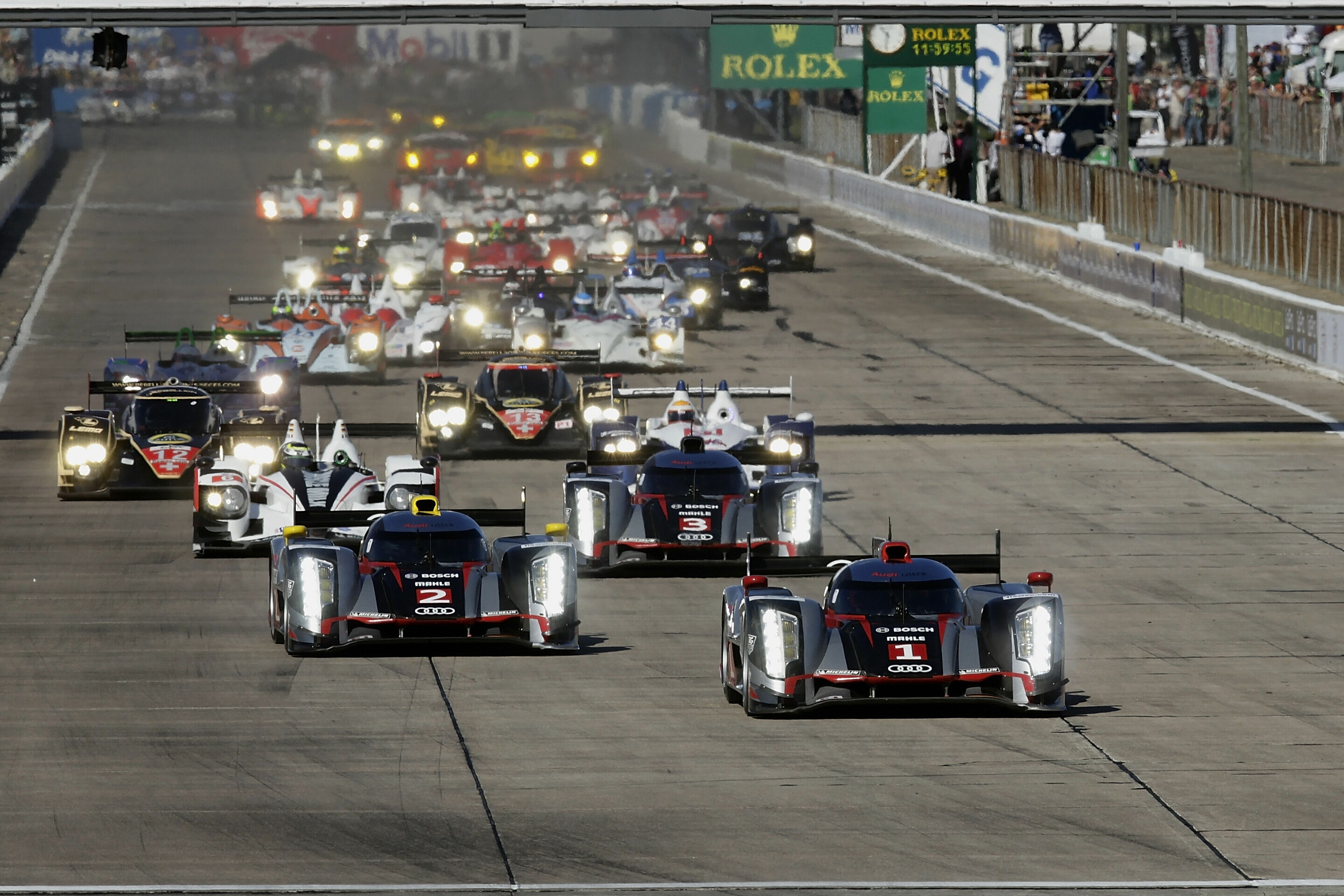
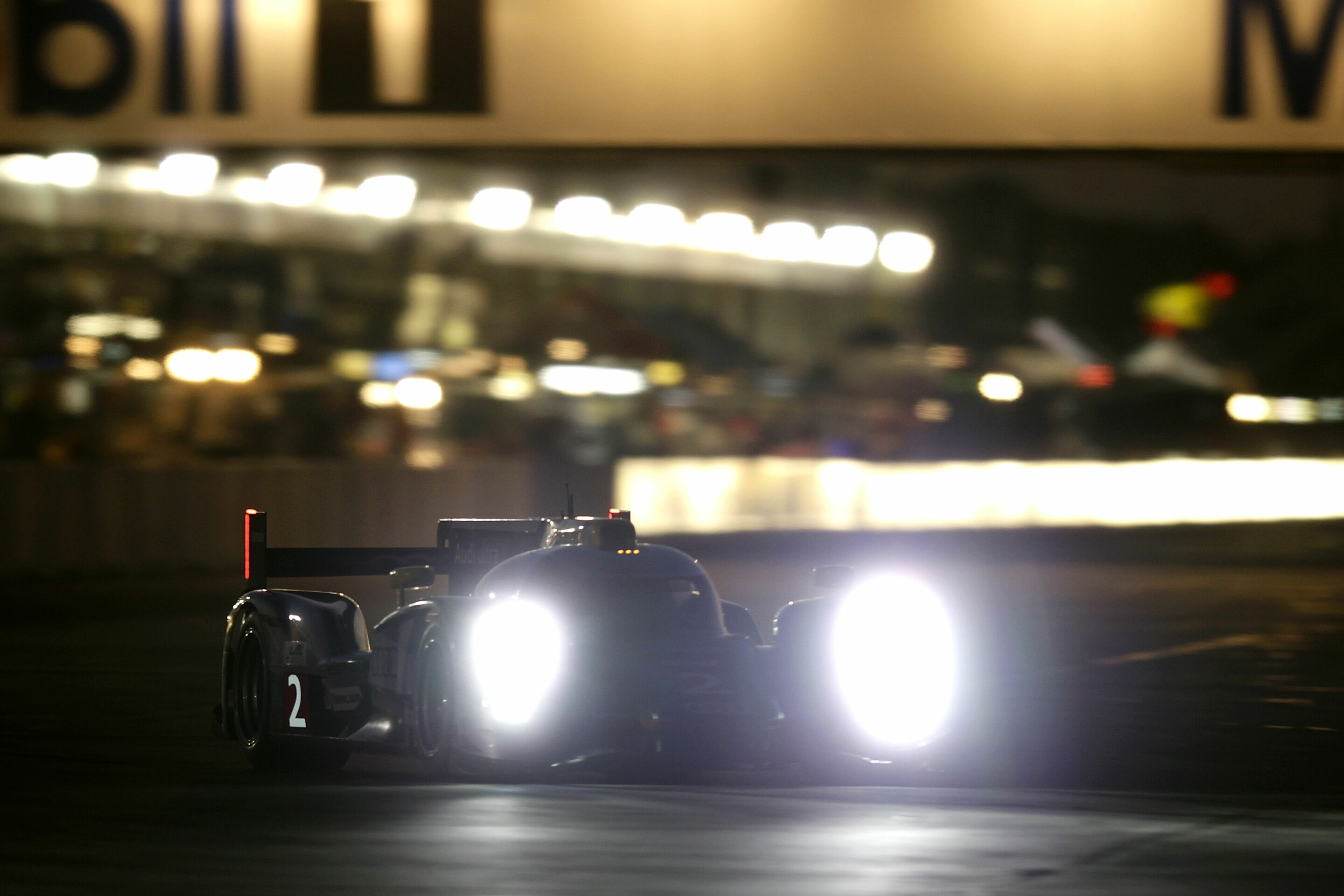
The race itself did not lack drama for the absence of a rival marque. Sixty-four cars started: the WEC's 30 sharing the Sebring bill with 34 American Le Mans Series entries, a crossover event that would never be repeated in quite the same form. André Lotterer took pole in the #1 Audi at 1:45.820. Eleven full-course caution periods, fifty-five laps under safety car conditions out of 325 completed, reshuffled the field repeatedly through the twelve hours. When it was done, Audi had led all but two laps: the #2 car of Allan McNish, Tom Kristensen and Rinaldo Capello won by four laps over its own sister entry, with an LMP2 Honda-powered HPD taking a surprise third overall ahead of every other LMP1. In GT, the finish nobody saw coming: Joey Hand's BMW passed Olivier Beretta's Ferrari on the very last corner of the very last lap to steal the class win by less than a car length.
A championship announced as a battle between manufacturers opened as a procession by one of them, and still delivered a last-corner finish for the win nobody was watching.
What makes Sebring 2012 worth returning to isn't the result on its own; a lopsided LMP1 fight is not, by itself, a story. It's what the result obscures. The absence of Peugeot and the delay of Toyota meant the race that opened the championship most associated today with a three-way hybrid arms race, Audi's e-tron quattro, Toyota's TS030 and later TS040, Porsche's 919, was won by a car with none of that technology on board. The hybrid version of the R18 wouldn't race until round two, at Spa. Sebring 2012, in that sense, is the last WEC race that belonged entirely to the old diesel-prototype era, run in a championship whose entire subsequent identity would be defined by what came immediately after it.
It also set a pattern the WEC would repeat more than once in the years since: a grid assembled under pressure, an entry list reshaped weeks before lights-out by a manufacturer's exit, and a championship that opened anyway. The 2026 season's own late reshuffling, a postponed Middle East round, a calendar rebuilt on short notice, has more in common with March 2012 than it might first appear.